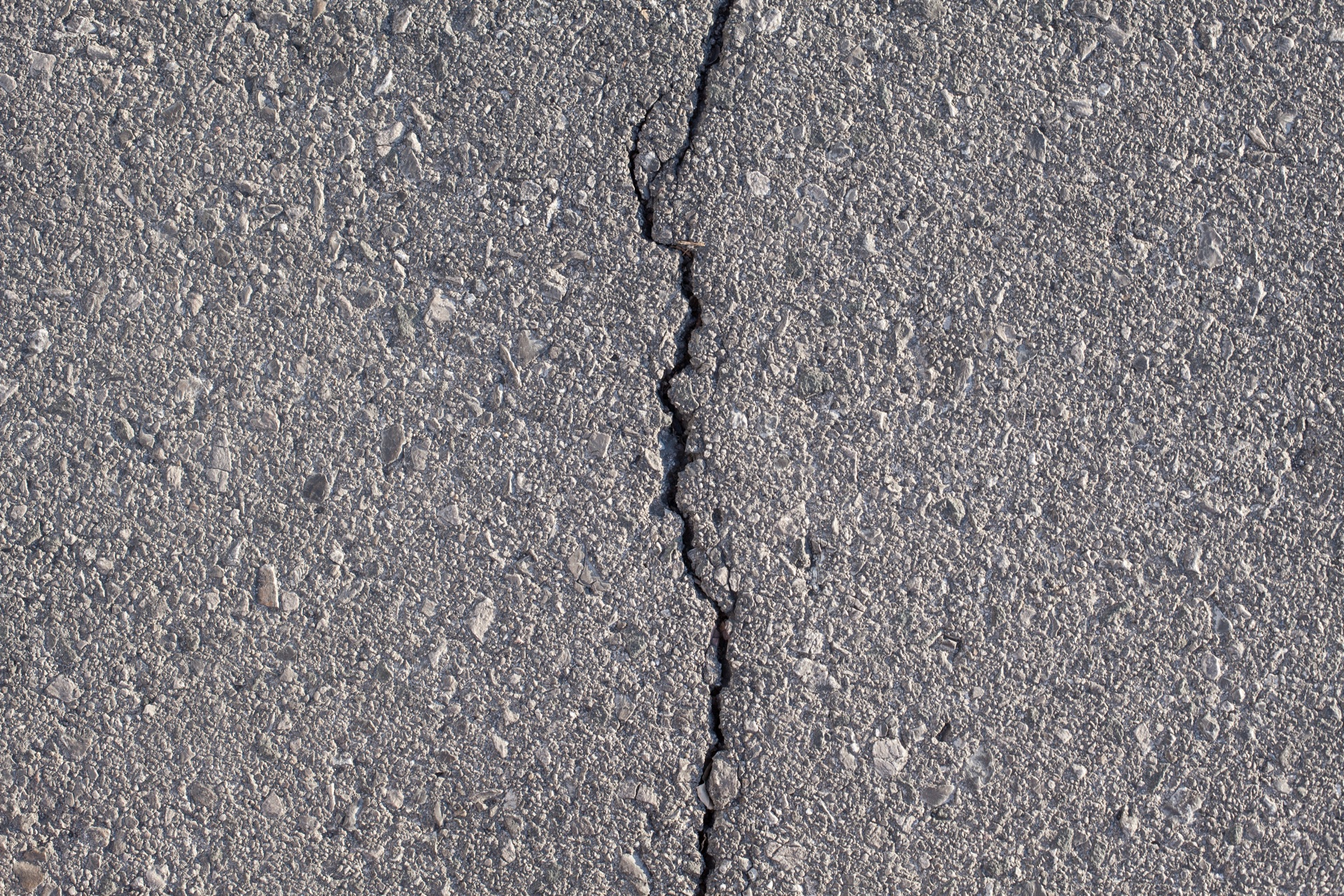
McLean Asphalt provides professional asphalt crack sealing and filling for driveways and parking lots throughout Fairfax County, Loudoun County, and Northern Virginia.
Cracks are the earliest sign of asphalt deterioration — and the cheapest point at which to intervene. Untreated cracks allow water to penetrate the base, leading to pothole formation and base failure that costs significantly more to repair. Northern Virginia's 50–80 annual freeze-thaw cycles make crack sealing a critical annual maintenance step. McLean Asphalt uses rubberized hot-pour crack filler that flexes with temperature changes and provides a durable, watertight seal.
Crack sealing: $75–$250 for a typical residential driveway. Exact cost depends on linear footage of cracks. Free estimate.
McLean Asphalt seals asphalt cracks throughout McLean, VA using hot-pour rubberized sealer — flexible enough to survive 20+ Northern Virginia freeze-thaw cycles without debonding.
Single cracks running lengthwise or across the driveway. Usually caused by thermal expansion and contraction or joint movement. Treatable with rubberized crack filler. Good candidate for sealing — indicates surface deterioration, not base failure.
Cracks running parallel to the driveway edge, often accompanied by edge crumbling. Caused by lack of lateral support and water erosion at the edge. Treated with crack fill plus patching of the edge area if structural damage has occurred.
Interconnected cracking pattern that resembles alligator skin. Indicates base failure — the structural layer beneath the asphalt has failed under repeated load. Crack fill won't hold here; the area needs excavation, base repair, and new asphalt.
Cracks that appear in an overlay above cracks in the existing pavement below. Common in resurfaced driveways where the existing cracks were not properly sealed before the overlay was applied. Treatment depends on severity.
Professional crack sealing is more than squeezing filler into a crack. The method determines whether the repair holds through 20+ freeze-thaw cycles.
We rout or saw-clean the crack to remove debris, loose material, and vegetation. Clean crack walls are essential for sealer adhesion — filling over dirt or organic material causes the sealer to debond within one season.
Cracks under 1/4" get liquid crack sealer. Cracks 1/4"–1" get hot-pour rubberized sealer heated to 375°F — it flows into the crack, bonds to both walls, and remains flexible through temperature swings. Cracks over 1" need evaluation for base failure before sealing.
Hot-pour sealer is applied from a direct-fire melter with a wand applicator. We fill to slightly overfill, then squeegee flush with the surface. Overfilling by 1/8" allows for shrinkage as the material cools and bonds to the crack walls.
We apply a light sand coating to the still-warm sealer to prevent tracking onto shoes and tires. The sealer cures within 30–60 minutes in warm weather. The surface is ready for traffic the same day.
Crack repair is one of the most cost-effective maintenance services available — catching cracks early costs $1–$3 per linear foot vs. resurfacing an entire driveway for $3,000–$5,000 when those same cracks have been ignored for years. The method and price depend on crack width, depth, and pattern.
The method and price depend on crack width, depth, and cause.
Surface oxidation cracks. Addressed with liquid crack filler or included in a sealcoating job. Not structurally significant but let water in if left open.
Rubberized hot-pour crack sealer. Bonds to both walls and flexes with temperature changes. Most residential driveway crack work falls here.
Usually indicates base movement. We assess whether crack filling is sufficient or a full patch is needed. Filling over a wide settlement crack without addressing the base is temporary at best.
Network of cracks indicating base failure. Cannot be filled — the section must be removed and replaced. Filling alligator cracking is wasted money; the base problem must be addressed.
Crack sealing is one of the most cost-effective interventions in pavement maintenance — treating 100 linear feet of cracks with hot-pour sealer at $150–$300 prevents base saturation that would otherwise require a $3,000–$5,000 resurfacing in 3–5 years. The math is compelling, which is why proactive crack sealing is the foundation of every sound pavement maintenance program.
Not all cracks are equal, and not all crack repair quotes are comparable. A quote that applies cold-pour filler from a bag is cheaper upfront but provides no meaningful protection — cold-pour has minimal bonding strength and fails within one or two freeze-thaw cycles. Hot-pour rubberized crack filler, applied at 350–400°F with commercial equipment, is the only crack repair method that provides multi-year performance in Northern Virginia's climate. McLean Asphalt uses commercial hot-pour equipment on every crack sealing job — no consumer-grade shortcuts.
One crack repair scenario that changes the cost equation entirely: alligator cracking. When cracks have interconnected into a scale pattern covering significant areas of the surface, individual crack sealing is no longer the right tool. Those areas have experienced base failure, and the correct repair is full-depth reconstruction of the failed zone — not sealing over the surface. McLean Asphalt identifies alligator cracking during the estimate visit and gives you a straight assessment of whether crack sealing or resurfacing is the appropriate scope. Call 571-234-7040.
Not sure if you need service now or can wait? Here are the signs that indicate it's time to call McLean Asphalt at 571-234-7040.
Cracks wider than 1/4 inch are beyond what sealcoating alone can bridge. Hot-pour rubberized crack filler — applied at 350–400°F — fills the crack at depth and bonds to both walls, creating a flexible seal that moves with the asphalt through freeze-thaw cycles. Waiting until cracks exceed 1/2 inch significantly increases the risk of water infiltrating the base and accelerating failure below.
If you've noticed a crack that was 6 inches long last spring and is now 18 inches, it's actively expanding under thermal and load stress. Growing cracks need to be addressed before they interconnect with adjacent cracks and form alligator patterns — at which point individual crack repair is no longer the appropriate tool and resurfacing becomes necessary.
Water collecting in open cracks after rain is actively eroding the aggregate base beneath. Each rain event carries fine particles out of the base through open cracks, progressively weakening the structural foundation. Crack sealing stops this base erosion at the source before it creates a pothole or depression.
A crack wide enough to see through to the base beneath means the base is exposed to water and frost. Frost will force the crack walls apart with each freeze cycle. Crack sealing at this stage stops the expansion; waiting through another winter risks the crack widening enough to require full-depth repair rather than sealing.
Alligator cracking (interconnected pattern covering large areas) cannot be repaired with crack sealing — it requires resurfacing or reconstruction. McLean Asphalt diagnoses crack pattern and base condition on every estimate visit and tells you honestly which service is appropriate. Call 571-234-7040.