McLean Asphalt provides professional asphalt sealcoating for driveways and parking lots throughout Fairfax County, Loudoun County, and Northern Virginia.
Sealcoating is the single most cost-effective way to extend the life of an asphalt surface. A fresh coat of sealer protects against UV oxidation, water infiltration, oil stains, and the freeze-thaw damage that Northern Virginia's winters cause to untreated pavement. Done every 2–3 years, professional sealcoating can double the life of a driveway — for a fraction of the cost of replacement.
Residential driveway sealcoating: $0.15–$0.35 per sq ft. Typical 500 sq ft driveway: $75–$175. Free estimate.
McLean Asphalt applies commercial-grade sealcoating to driveways and parking lots throughout McLean, VA — two-coat application, crack filling included, lasts 2–3 years.
Asphalt contains oils that keep the pavement flexible. UV radiation breaks down these oils, causing the surface to turn gray, become brittle, and start cracking. Sealer blocks UV rays and slows oxidation significantly.
Water is asphalt's enemy. Moisture penetrates cracks, erodes the stone base, and expands during freezing. Sealcoating fills minor surface voids and creates a waterproof barrier that stops this cycle before it starts.
Petroleum-based fluids from vehicles soften and break down asphalt binders. Sealer creates a protective barrier that resists fuel spills, oil leaks, and road salt — all common in Northern Virginia driveways.
New driveways: wait 12 months before first sealing. After that, every 2–3 years is the correct interval. Too frequent (every year) prevents proper cure between coats; too infrequent lets UV damage accumulate.
Professional sealcoating is more than brushing on a coat. Our process ensures the coating bonds and lasts 2–3 years.
We blow off all debris and treat oil spots with degreaser primer. Sealer cannot bond to dirty or oily surfaces — skipping this step is the top reason DIY sealcoating fails within one season.
Cracks over 1/4 inch get rubberized hot-pour crack sealer before sealcoat goes down. Applying sealcoat over open cracks seals in water, which freezes and expands in winter — making cracks worse, not better.
We hand-brush sealer along all edges, curbs, and tight areas before the main application. This ensures complete coverage at the most vulnerable part of the driveway — the edge — where water penetration starts.
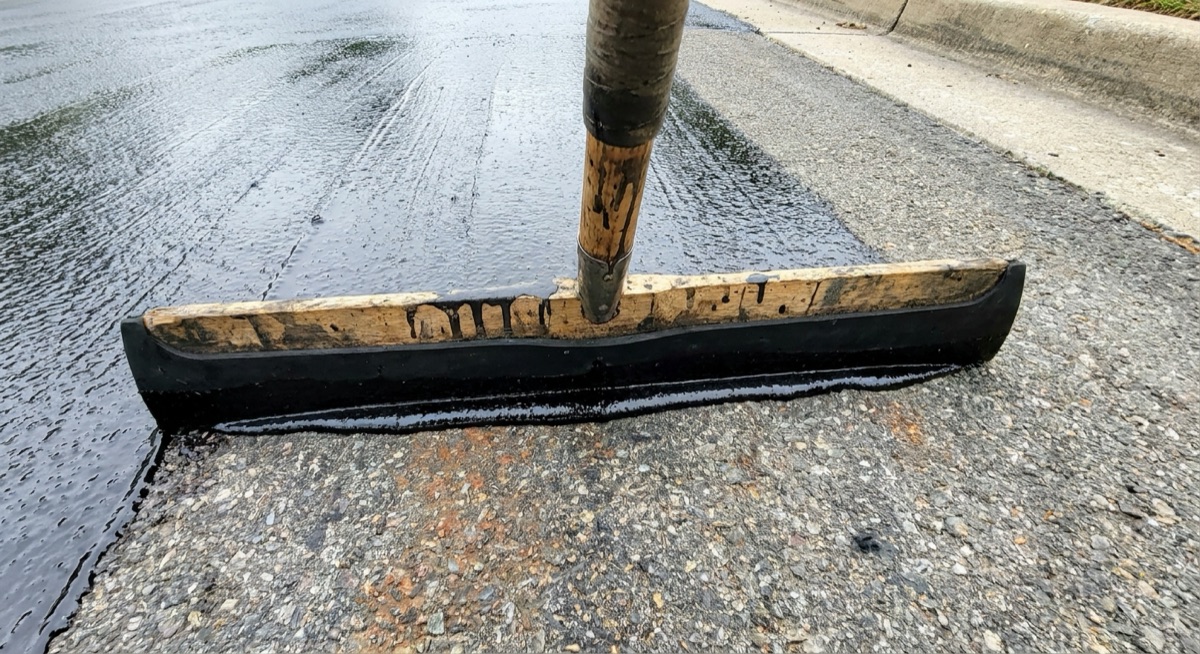
Two coats of commercial-grade sealer applied by squeegee in alternating directions. We require 4–6 hours between coats and 24 hours before opening to traffic. Two coats provide uniform coverage without thin spots.
Not all sealers are equal. Here's what separates a professional application from a DIY job.
Sealcoating is the lowest-cost, highest-ROI maintenance service available for asphalt driveways. Price is driven by square footage, number of coats, and whether crack filling is needed as part of the prep. The table below reflects professional two-coat emulsion sealer application rates.
Sealcoating every 2–3 years costs $300–$600 per cycle and extends driveway life by 5–8 years per application. Not sealcoating costs $4,000–$8,000 in premature resurfacing or replacement. McLean Asphalt: 571-234-7040.
The financial case for sealcoating is straightforward: a $300–$600 sealcoating every 2–3 years protects a $4,000–$8,000 asphalt investment that would otherwise need resurfacing 5–8 years earlier than a maintained driveway. Over a 30-year driveway lifespan, consistent sealcoating typically means one fewer full resurfacing cycle — a saving of $2,500–$4,000 — plus the compounding benefit of a surface that stays flexible and crack-resistant rather than oxidizing and becoming brittle.
The quality difference between professional and hardware-store sealcoating is significant. Consumer products (emulsion in a 5-gallon bucket, brush-applied) provide 6–18 months of protection and often dry unevenly. Professional two-coat application using commercial spray equipment and proper emulsion-to-sand ratios provides 2–3 years of protection and dries to a uniform deep black finish. The material cost difference is minor; the labor difference is what separates the results.
One sealcoating mistake that costs more than it saves: sealing too soon after new asphalt installation. New asphalt contains volatile oils that need to off-gas through the surface for 6–12 months. Sealing before that window traps the oils, prevents proper adhesion, and can leave a surface that stays tacky or develops adhesion failures in the first season. McLean Asphalt will advise you on whether your driveway is in the curing window or ready for sealcoating at the estimate visit. Call 571-234-7040.
Not sure if you need service now or can wait? Here are the signs that indicate it's time to call McLean Asphalt at 571-234-7040.
Fresh asphalt is deep black. UV oxidation turns it progressively lighter — gray within 2–3 years of no protection, lighter gray at 5+ years. The color change signals binder loss and increased brittleness. Sealcoating restores UV protection and slows further oxidation. If your driveway is noticeably gray, sealcoating now is significantly less expensive than waiting until cracking begins.
Hairline cracks to 1/4 inch width are the early sign of advancing oxidation and are the entry point for water infiltration. These cracks need to be filled before sealing — hot-pour crack filler seals the crack at depth; sealer bridges the surface. Catching cracks at this stage costs far less than addressing 1/2 inch or wider cracks after water has infiltrated the base.
Asphalt emulsion sealer has a 2–3 year service life under Northern Virginia conditions. When you can scratch the surface with your fingernail and see lighter material beneath, the sealer has worn through and the base asphalt is directly exposed to UV and water. Most McLean area driveways should be sealcoated on a 2–3 year cycle.
A freshly sealcoated driveway — deep black against green landscaping — is one of the most impactful low-cost curb appeal improvements available to homeowners in the McLean area. Sealcoating at $300–$600 can noticeably improve first impressions on listing photos and at open houses.