Asphalt Overlay in McLean, VA

McLean Asphalt installs asphalt overlays on driveways and parking lots throughout Fairfax County, Loudoun County, and Northern Virginia — a cost-effective way to restore surface quality without full tear-out and replacement.

An asphalt overlay (sometimes called resurfacing) involves applying a new layer of hot-mix asphalt — typically 1.5–2 inches — directly over the existing pavement after proper surface preparation. The result is a fresh, smooth surface that looks and performs like a new driveway, at roughly 30–50% of the cost of full replacement. The key to a durable overlay is proper preparation: filling all existing cracks, applying tack coat for adhesion, and ensuring the base is structurally sound before the new layer goes on.

Asphalt overlay: $2–$5 per sq ft versus $4–$10 per sq ft for full replacement. Free on-site estimate to determine if your driveway qualifies.

(571) 389-7109

Free Overlay Estimate

Why McLean Asphalt is the Best at Asphalt Overlay

McLean Asphalt resurfaces worn driveways and parking lots with hot-mix overlay throughout McLean, VA — the cost-effective alternative to full replacement when the base is still sound.

  • Structural assessment — only recommend overlay when base is sound
  • Fill all cracks with rubberized hot-pour filler
  • Patch any potholes or severely damaged sections
  • Apply asphalt tack coat to bond overlay to existing surface
  • Install 1.5–2 inch hot-mix asphalt and compact
  • Define clean, finished edges throughout
  • Most overlay jobs completed in one day
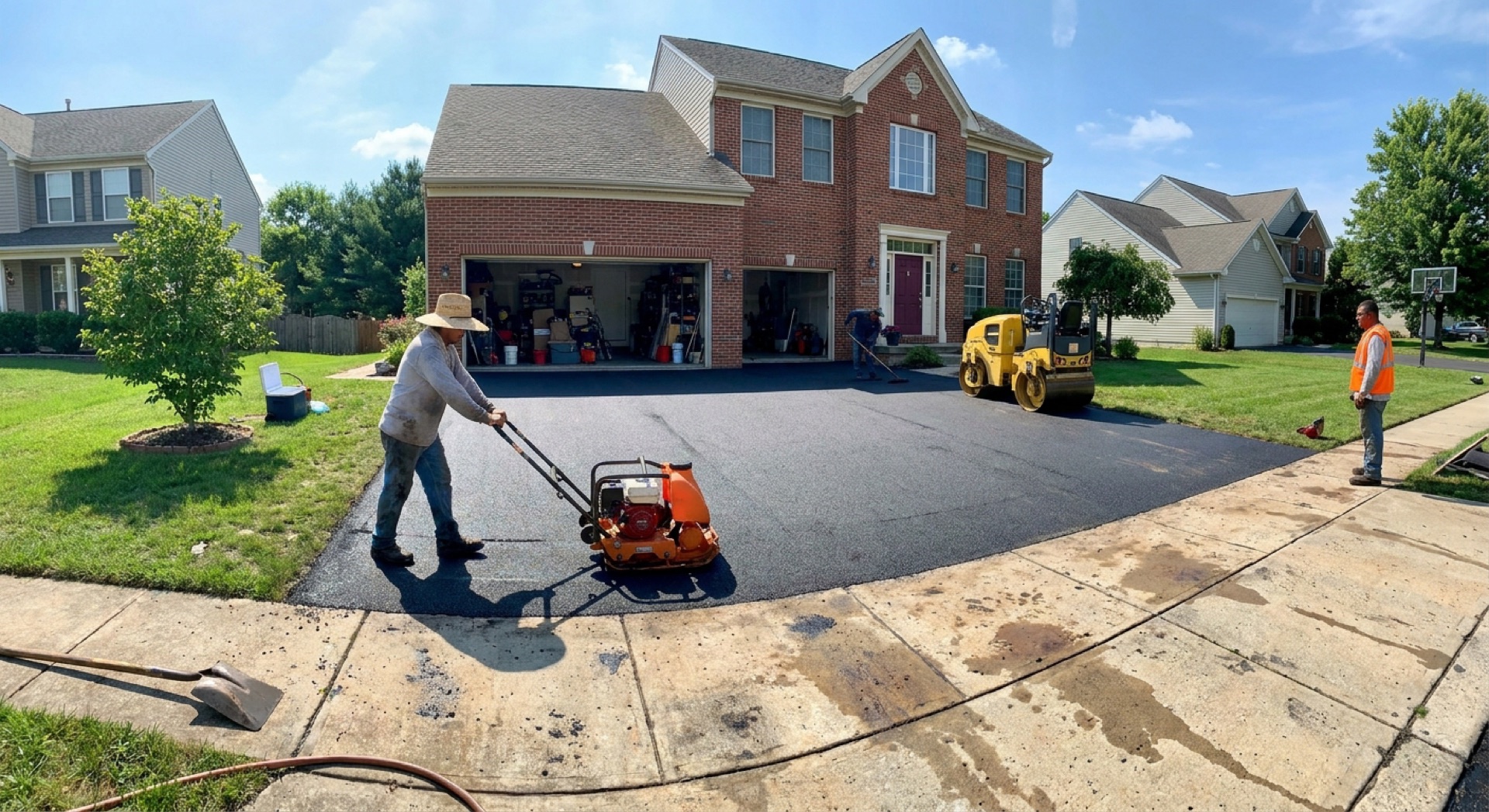
Asphalt overlay Northern Virginia

Overlay vs. Full Replacement — Key Differences

Asphalt Overlay

Cost: $2–$5/sq ft. Lifespan: 10–15 years. Requires: Sound structural base, no widespread alligator cracking. Process: Crack fill, tack coat, 1.5–2 inch hot-mix layer, compaction. Ideal for: Driveways that are worn but not structurally failed — typically 10–20 years old and showing surface deterioration without base failure.

Full Replacement

Cost: $4–$10/sq ft. Lifespan: 20–30 years. Requires: Nothing — starts fresh. Process: Remove existing asphalt, prepare stone base, install 3-inch hot-mix surface. Ideal for: Driveways with widespread alligator cracking (base failure), age over 25 years, or those that have already been overlaid multiple times.

How a Proper Overlay Is Installed

A proper overlay does more than add an inch of asphalt. Each step determines whether the surface lasts 10–15 years or fails within 3.

1. Base Evaluation

We inspect for soft spots, alligator cracking, and drainage issues before committing to an overlay. If base failure is widespread, we'll recommend replacement — overlaying a failed base guarantees the same problems reappear within 2–3 years.

2. Patch and Prep

Localized failures are saw-cut and patched. We check that the finished elevation clears the garage threshold and curb transitions. Milling may be needed at the apron to maintain clearance at the street connection.

3. Tack Coat

Liquid asphalt emulsion tack coat is applied before the overlay. This creates a chemical bond between old and new layers. Without tack, the overlay can delaminate — acting as a separate slab rather than a unified surface under traffic and temperature stress.

4. Overlay and Compact

1.5–2 inches of hot-mix is machine-laid and compacted. The surface is graded for drainage and edges cleanly defined at grade with garages, sidewalks, and aprons. Most residential overlays completed in a single day. Open to traffic in 24 hours.

Overlay Cost vs. Full Replacement

Asphalt overlay is the right choice when the base is confirmed sound — it delivers a new surface at 40–60% less cost than full replacement. The comparison below shows what each option costs for a standard McLean residential driveway, and what each includes.

For a standard 600 sq ft two-car driveway in McLean, here's what each option costs and what you get.

Asphalt Overlay

Cost (600 sq ft)$1,200–$3,000
Per sq ft$2–$5
Added lifespan10–15 years
Job duration1 day
RequiresSound base
Right choice when base is still solid

Full Replacement

Cost (600 sq ft)$2,400–$6,000
Per sq ft$4–$10
Added lifespan20–30 years
Job duration1–2 days
RequiresFull tearout
Right choice when base has failed

McLean Asphalt assesses base condition before recommending which option makes sense. We never recommend replacement when an overlay will do the job.

What Drives Asphalt Overlay Cost — and When an Overlay Is the Right Call

An asphalt overlay sits between crack sealing and full reconstruction on the cost and intervention scale. Where crack sealing addresses surface deterioration for a few hundred dollars and reconstruction rebuilds from subgrade for $10–$20+ per square foot, an overlay replaces only the surface course — at $2–$5 per square foot — and buys 8–15 years of renewed life on a structurally sound base. The math works when the base is confirmed solid; it fails when the base is compromised and the overlay simply delays the inevitable reconstruction.

The key indicator that an overlay is the right scope rather than reconstruction: the cracking pattern. Surface course deterioration — weathering, oxidation, shallow cracks that haven't reached the base — is ideal overlay territory. Alligator cracking (interconnected cracks covering large areas), significant depressions, or areas that flex underfoot signal base failure and require full-depth repair in those zones before any overlay is placed. McLean Asphalt probes base condition at every overlay estimate and identifies which areas need base work versus which areas can be overlaid directly — we document both in the written proposal so the scope is fully transparent.

Overlay thickness is a variable that directly affects longevity and cost. A 1-inch overlay provides a refreshed surface but limited structural contribution; it's appropriate when the existing surface is sound but weathered. A 1.5–2 inch overlay adds meaningful structural capacity and longevity — appropriate when the existing surface has moderate deterioration but a sound base beneath. McLean Asphalt specifies overlay thickness based on existing condition and traffic loads, not a one-size approach. For commercial lots in particular, we use Virginia DOT Superpave mix specifications (SM-9.5A or SM-12.5A depending on traffic class) for every overlay — the same material standard used on public roads. Call 571-234-7040 for a written overlay estimate.

Signs Your Driveway Is a Good Overlay Candidate

Not sure if you need service now or can wait? Here are the signs that indicate it's time to call McLean Asphalt at 571-234-7040.

Surface Cracks But No Alligator Pattern or Base Failure

Linear cracks, edge cracks, and minor transverse cracking are signs of surface distress — not necessarily base failure. When the base beneath is still structurally sound, a 1.5–2 inch Superpave overlay is the most cost-effective repair option, extending driveway life 10–15 years at 40–60% less cost than full replacement. McLean Asphalt probes the base to confirm soundness before recommending overlay.

Rough, Oxidized Surface with Good Structural Feel

A driveway that feels firm and stable underfoot but looks rough, gray, and weathered is a prime overlay candidate. The surface oxidation is cosmetic in the sense that the underlying structure is still good — overlay replaces the failed surface layer while leveraging the good base, providing maximum value.

Surface Height Allows 1.5–2 Inch Addition

Overlay adds 1.5–2 inches to the finished surface height. For overlay to be viable, the existing surface must be low enough at the street apron, garage threshold, and any adjacent concrete transitions to accommodate that height addition. McLean Asphalt measures height compatibility at every estimate visit.

Isolated Failed Areas Patched Before Overlay

Any areas of alligator cracking, depressions, or base failure need to be cut out and fully repaired before an overlay is placed. Overlaying over failed areas produces a smooth surface that looks repaired but fails again at those locations within 1–3 years. McLean Asphalt identifies all failed areas and includes full-depth repair of those spots in the overlay proposal.

The cost comparison shifts when base repairs are needed — if isolated sections need full-depth repair before overlaying, add $12–$22/sq ft for those areas. McLean Asphalt identifies all base repair requirements during the estimate visit and includes them in the written proposal. Call 571-234-7040.

Asphalt Overlay FAQ

What is the difference between asphalt overlay and asphalt resurfacing?
The terms are used interchangeably in the industry. Both refer to installing a new layer of hot-mix asphalt over existing pavement. Some contractors use "resurfacing" to include milling (removing the old surface first), while "overlay" more specifically means applying on top of the existing surface without milling. We clarify which approach applies to your project during the estimate — milling is sometimes included in a resurfacing job when elevation management is a concern.
Will cracks from the old driveway show through the overlay?
This is called reflective cracking and it can occur over time. Cracks in the existing surface can propagate upward through the new overlay layer, typically appearing 3–7 years after installation. The mitigation is thorough crack preparation before the overlay: routing and sealing all cracks, and in some cases applying a geotextile fabric interlayer over severe crack areas. We include crack preparation as a required step on every overlay project.
How many times can you overlay a driveway before you need to start over?
Generally, a driveway can support 1–2 overlays before the cumulative surface height creates problems at the garage entrance, property edges, or drainage patterns. After 2 overlays, a full tear-out is usually necessary to reset the grade. We assess the existing surface height during every overlay estimate and advise when a full replacement makes more sense for your specific situation.
How thick is an asphalt overlay?
Standard residential overlay thickness is 1.5 inches of compacted SM-9.5A Superpave surface mix. Two-inch overlays are used when some structural enhancement is desired or where the surface is rough enough that a thicker lift improves smoothness. Two-and-a-half-inch overlays (approaching two-lift territory) are used for heavier loading or where significant depth correction is needed.
Does an overlay require removing the old asphalt?
No — in a straight overlay, the existing asphalt serves as the base for the new layer. A tack coat (liquid asphalt emulsion) is applied to the existing surface to ensure proper bonding between old and new asphalt before the overlay is placed. If height compatibility is an issue, mill-and-overlay (milling off the old surface first) achieves the same result while keeping finished height the same as before.
How long does an asphalt overlay last in McLean?
A properly installed overlay on a confirmed-sound base lasts 10–15 years in Northern Virginia. Driveways maintained with sealcoating every 2–3 years after overlay tend toward the 15-year end. Overlays in McLean's clay-soil areas where drainage is poor tend toward the shorter end. McLean Asphalt assesses drainage during the estimate visit and recommends drainage improvements where they'll extend overlay life.
Can I overlay a driveway that was previously sealcoated?
Yes. Sealcoated surfaces can be overlaid after tack coating. We scuff or lightly clean the existing sealcoated surface before tack coat application to improve adhesion. The tack coat bonds the new asphalt to the existing sealcoated surface — a properly applied tack coat eliminates any delamination risk between old sealer and new asphalt.

Is an Overlay Right for Your Driveway?

McLean Asphalt assesses every driveway honestly — we'll tell you if an overlay or full replacement is the better value. Free estimates throughout Northern Virginia.

(571) 389-7109 — Call for a Free Estimate
(571) 389-7109