Asphalt Resurfacing in McLean, VA

McLean Asphalt resurfaces worn driveways and parking lots throughout Fairfax County, Loudoun County, and Northern Virginia — a cost-effective alternative to full replacement when the base is still structurally sound.

Asphalt resurfacing (also called an overlay) involves applying 1.5–2 inches of fresh hot-mix asphalt directly over the existing pavement after proper preparation. When the base is solid and the existing surface is worn but not structurally failed, resurfacing delivers a like-new surface at roughly 30–50% of the cost of full tear-out and replacement. It's the middle ground between sealcoating and full replacement.

Asphalt resurfacing: $2–$5 per sq ft versus $4–$10 per sq ft for full replacement. Significant savings on large areas. Free on-site estimate.

(571) 389-7109

Free Resurfacing Estimate

Why McLean Asphalt is the Best at Asphalt Resurfacing

McLean Asphalt resurfaces worn asphalt driveways and parking lots throughout McLean, VA — extending surface life 10–15 years at roughly half the cost of full replacement.

  • Full structural assessment before recommending resurfacing
  • Crack fill and patch all existing damage before overlay
  • Apply tack coat over existing surface for proper bond
  • Install 1.5–2 inch hot-mix asphalt overlay and compact
  • Clean, defined edges with no step between new and existing
  • Most resurfacing jobs completed in one day
  • Written quote before work begins — no surprise add-ons
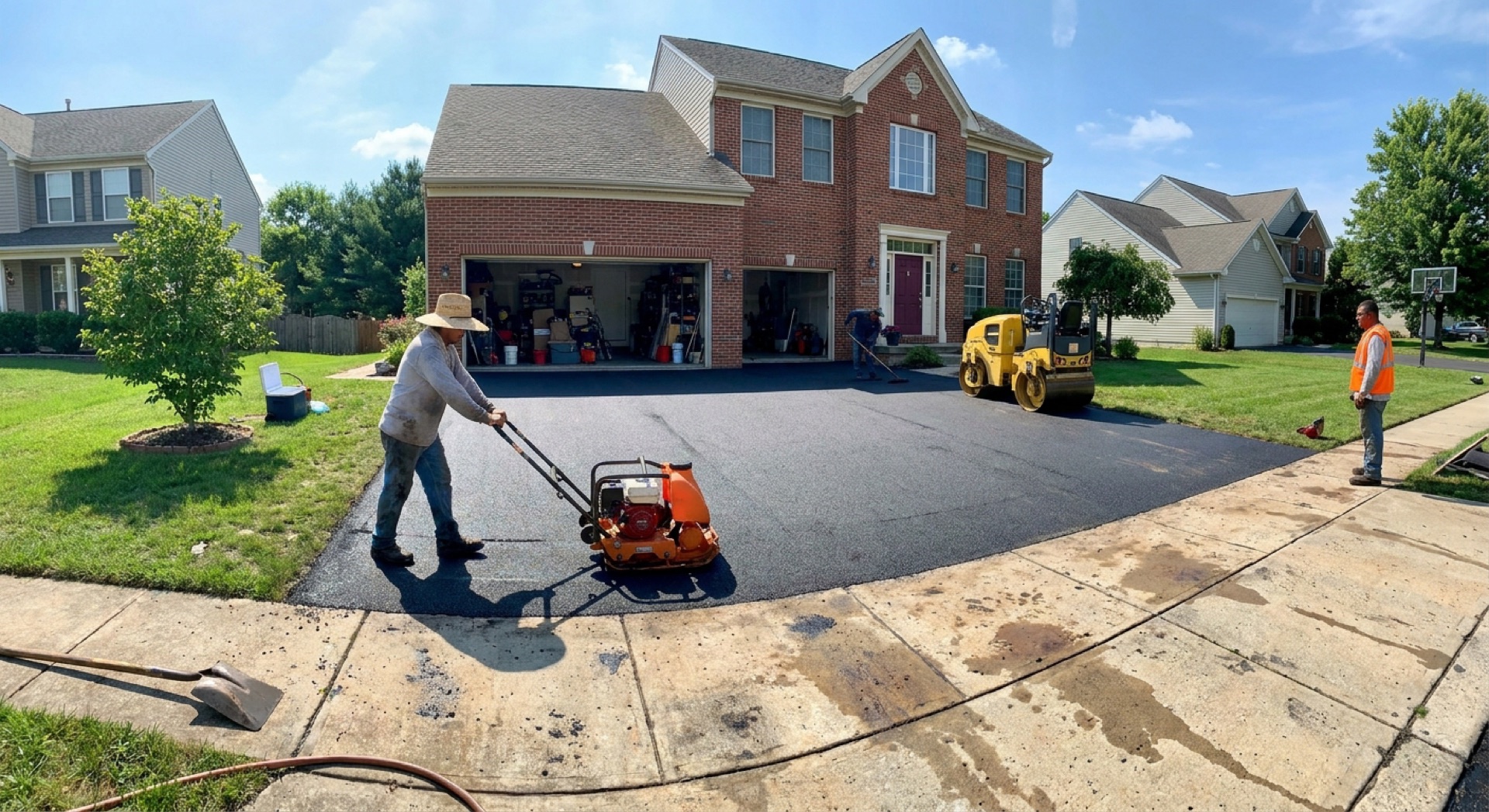
Asphalt resurfacing Northern Virginia

Resurfacing vs. Full Replacement — How We Decide

Good Candidate for Resurfacing

Surface is worn, gray, and showing surface cracks — but the pavement is still solid when you press on it. No large areas of alligator cracking. The base drains properly (no standing water pooling after rain). Asphalt is 10–20 years old. Cost savings vs. replacement: typically $1,000–$5,000+ on a standard driveway.

Needs Full Replacement Instead

Widespread alligator cracking indicating base failure. Large sunken areas or standing water after rain — drainage failure usually means base is failing. Multiple prior overlays have raised the surface level at the garage approach. Age over 25–30 years — base likely compromised throughout. Resurfacing over a bad base is a short-term fix that will fail.

Resurfacing — The Complete 4-Step Process

A proper overlay does more than add an inch of asphalt. Each step determines whether the surface lasts 10–15 years or fails within 3.

1. Base Assessment

We inspect for soft spots, alligator cracking, and drainage issues. Resurfacing only works when the base is structurally sound — overlaying a failed base guarantees the same failures reappear within 2–3 years.

2. Localized Patching

Any soft spots or structural failures are saw-cut and patched before the overlay, included in the project scope. Overlaying an unpatched bad spot guarantees it reflects through the new layer within a season.

3. Tack Coat

Liquid asphalt emulsion tack coat is sprayed on the existing surface before the overlay. This creates a chemical bond between old and new layers. Without tack, the overlay can delaminate — sliding on the old surface rather than bonding to it.

4. Overlay and Compact

1.5–2 inches of hot-mix is machine-laid and compacted with a vibratory roller. Surface graded for drainage and edges cleanly defined at grade with garages, sidewalks, and aprons. Most residential driveways completed in one day.

Resurfacing Cost Breakdown — What's Included

Resurfacing at $2–$5 per square foot includes more than just new asphalt — proper prep work is what determines whether the new surface lasts 10 years or 15. The table below breaks down where resurfacing cost goes, so you can compare quotes accurately and understand what you're paying for.

At $2–$5/sq ft, a resurfacing project includes more than just new asphalt. Here's where the cost goes.

Surface Prep

Clean the surface, inspect for structural issues, and identify any areas requiring patch before overlay. This step determines whether the job proceeds on schedule or needs additional base work.

Patch Work

Localized patching of soft spots or structural failures, included in the project estimate. Skipping patch work and just overlaying is the main reason resurfacing jobs fail early.

Tack Coat

Liquid asphalt emulsion applied before the overlay. Required for proper bonding between old and new layers. Without it, the overlay acts as a separate slab rather than a unified surface.

Hot-Mix and Labor

1.5–2" hot-mix asphalt, machine-laid and compacted. Includes equipment time, crew labor, and material hauling. Most residential driveways (600–1,000 sq ft) completed in a single day.

What Separates a Lasting Resurfacing from One That Fails Early

Resurfacing quotes in Northern Virginia range from $1.50 to $5.00 per square foot for what looks like the same service. The difference is almost entirely in preparation and material quality. A $1.50/sq ft resurfacing typically skips crack filling, applies minimal tack coat, and places a single thin lift of base mix (not surface course). A $3.00–$5.00/sq ft resurfacing fills cracks, applies full tack coat coverage, and places a proper SM-9.5A Superpave surface course at the specified 1.5–2 inch compacted depth.

The consequences play out over time. The cheaper resurfacing will show reflective cracking (where existing cracks mirror through the new surface) within 2–4 years, and surface delamination (the new overlay separating from the base asphalt) within 3–6 years. The correctly prepared resurfacing will last 10–15 years on a sound base. Over a 15-year horizon, the cheaper resurfacing that fails in 4 years and needs redoing costs more than the correctly done job from the start.

McLean Asphalt's resurfacing proposals itemize every prep step — crack filling, base repairs, tack coat — so you can see exactly what's included. We won't apply an overlay over a surface that isn't properly prepped; it would reflect poorly on our work and waste your money. If base conditions found during prep work require adjustments to scope, we communicate before proceeding and get written approval before any cost change. Call 571-234-7040 for a written resurfacing estimate.

Signs Your Asphalt Surface Needs Resurfacing

Not sure if you need service now or can wait? Here are the signs that indicate it's time to call McLean Asphalt at 571-234-7040.

Surface Cracking Without Alligator Pattern

Linear cracks, edge cracks, and isolated transverse cracks that are still individually addressable indicate surface distress that hasn't yet reached the base. When cracks are present but the surface is still firm and level, a mill-and-overlay resurfacing addresses the failed surface layer and extends life 10–15 years at significantly less cost than full reconstruction.

Oxidized Gray Surface with Early Raveling

Asphalt that has turned from black to light gray has lost significant binder content through oxidation. Surface raveling — where aggregate loosens from the surface — follows oxidation and accelerates cracking. At this stage, resurfacing before raveling progresses to the base is significantly less expensive than waiting until base exposure requires full reconstruction.

Multiple Failed Patch Repairs

When a driveway or parking lot has been patched repeatedly and those patches are themselves failing, it signals that the surface has reached the end of its patch-repair cycle. At this point, resurfacing the full surface in one consistent operation produces better results and is more cost-effective than continued piecemeal repairs.

Surface Height Still Allows Overlay

Resurfacing adds 1.5–2 inches to the surface height. If the current surface is already raised significantly at the street apron or building threshold connections, there may not be enough clearance for an overlay. McLean Asphalt checks height compatibility at every estimate visit — if overlay isn't viable due to height, we recommend mill-and-overlay (milling off the old surface before paving new) to maintain proper clearances.

Low resurfacing quotes often omit prep steps (crack filling, tack coat) or use thinner asphalt lifts. McLean Asphalt's written proposals itemize every line so you can compare scope — not just total price. Call 571-234-7040 for a free written estimate.

Asphalt Resurfacing FAQ

How long does resurfaced asphalt last?
A properly installed asphalt overlay on a sound base lasts 10–15 years with routine maintenance (sealcoating every 2–3 years). This is approximately half the life of a full replacement, at roughly half the cost — making it a comparable value when the base is structurally intact.
Will resurfacing raise the level of my driveway at the garage door?
Adding 1.5–2 inches to the surface does raise the elevation slightly at the garage transition. For most garages this is a minor visual difference. If the existing driveway already has one prior overlay, a second overlay may create a noticeable step. We assess this on-site and advise if replacement would be preferable for drainage or clearance reasons.
Can cracks from the old surface show through after resurfacing?
Yes — this is called reflective cracking. Cracks in the old surface can propagate upward through a new overlay over time, typically appearing 3–5 years after the overlay if not addressed beforehand. The solution is to properly fill and prepare all cracks in the existing surface before installing the overlay, which is a required step in our process.
What is the difference between resurfacing and full replacement?
Resurfacing (overlay) places 1.5–2 inches of new asphalt directly over the existing surface — the old pavement serves as the base for the new layer. It's viable when the base is structurally sound. Full replacement removes all existing asphalt, rebuilds the aggregate base, and installs new asphalt throughout — necessary when the base has failed. Resurfacing costs 40–60% less than full replacement but is only appropriate when the base is confirmed sound. McLean Asphalt assesses base condition before recommending either option.
How long does an asphalt resurfacing overlay last?
A properly installed overlay on a sound base lasts 10–15 years in Northern Virginia conditions with regular sealcoating. Driveways sealcoated every 2–3 years after resurfacing tend toward the upper end of that range. The overlay's lifespan is limited by the base beneath it — if any latent base issues exist, they will manifest through the new surface within 3–5 years.
What is mill-and-overlay resurfacing?
Mill-and-overlay removes the existing failed asphalt surface using a cold-plane milling machine before placing new asphalt. This is used when: (1) the existing surface is too high for a straight overlay at apron or building connections; (2) the existing surface has significant cross-slope problems that need correction; or (3) multiple prior overlays have created excessive height. Milling costs add to the project, but the result is a properly bonded new surface at correct finished height.
Do I need to have cracks filled before resurfacing?
Yes. Active cracks should be filled with hot-pour rubberized crack sealer before an overlay is placed. Unfilled cracks reflect (mirror) up through the new asphalt layer within 2–5 years — a phenomenon called reflective cracking. McLean Asphalt fills cracks and applies a tack coat (bonding adhesive) before every overlay installation to maximize bond and minimize reflective cracking.

Could Resurfacing Save You Money?

McLean Asphalt provides honest assessments — we'll tell you if resurfacing or replacement is the better value for your specific driveway.

(571) 389-7109 — Call for a Free Estimate
(571) 389-7109