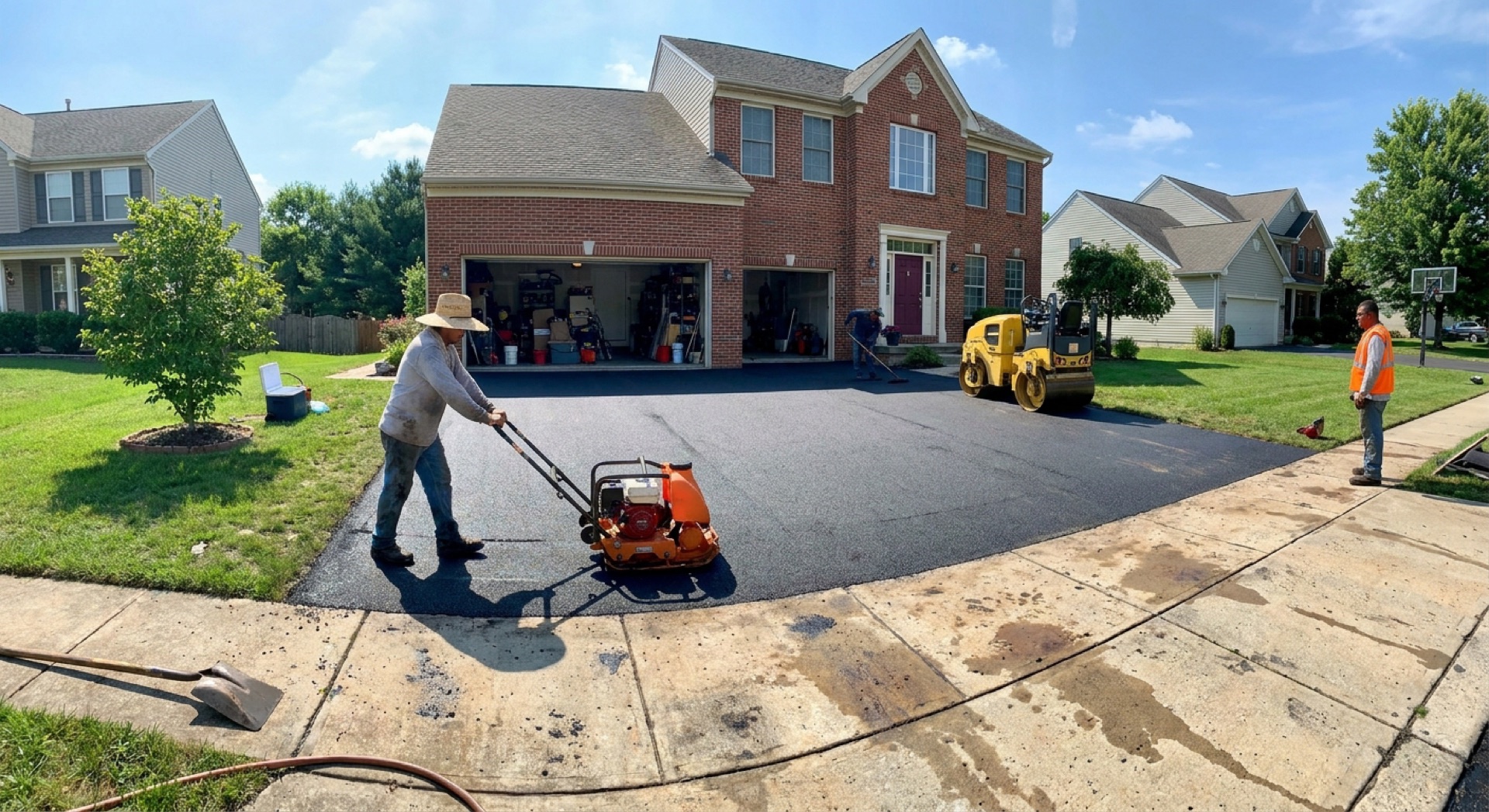
McLean Asphalt installs tar and chip (chip seal) driveways for homeowners throughout Northern Virginia — particularly popular on estate properties in Great Falls, Potomac, and rural Loudoun County.
Tar and chip is a paving method that produces a textured, natural-looking surface using a combination of hot liquid asphalt (the "tar") and decorative crushed stone (the "chip"). The result is a surface that looks more like a gravel or stone driveway than smooth asphalt, while providing significantly better stability and dust control than gravel. On large estate driveways where the aesthetic goal is a naturalistic approach — rather than a glossy black asphalt look — tar and chip is an excellent choice.
Tar and chip driveways: $2–$5 per sq ft installed. Less expensive than hot-mix for long driveways. Free on-site estimate.
McLean Asphalt installs tar and chip driveways throughout Northern Virginia — a textured, permeable surface with natural stone character, at a lower cost than standard hot-mix.
Appearance: Textured, natural stone look. Color depends on stone selected. Cost: $2–$5/sq ft. Lifespan: 7–15 years with periodic chip re-sealing. Maintenance: Needs re-chip sealing every 5–8 years. Best for: Long estate driveways, rural properties, natural aesthetic goals. Not permitted in most HOA communities.
Appearance: Smooth, uniform black surface. Cost: $4–$10/sq ft. Lifespan: 20–30 years with routine maintenance. Maintenance: Sealcoating every 2–3 years; crack sealing as needed. Best for: Suburban driveways, HOA communities, high-traffic applications, maximum durability.
Tar and chip is a time-sensitive process. Each step must be completed in sequence before the binder cools and sets.
The base must be compacted and stable. On existing asphalt, we inspect for structural issues and patch soft spots. On gravel, we grade and compact to a consistent profile. The binder won't adhere properly to a soft or uneven base.
Hot liquid asphalt binder is sprayed in a uniform layer at 0.25–0.35 gallons per square yard. Binder temperature at application is 275–325°F. We work quickly — the aggregate must be embedded before the binder cools and loses tackiness.
Stone aggregate is spread immediately onto the hot binder at 25–30 lbs/sq yd. Uniform coverage is critical — thin spots let binder show through, thick spots leave excess loose stone on the surface rather than embedding into it.
A pneumatic roller passes over the aggregate multiple times to seat the stones into the binder. Any loose stone not embedded after 2–3 passes is swept off. The surface cures fully within 24–48 hours — drive slowly and avoid sharp turns for the first week.
The aggregate determines the final color and texture of the surface. Here are the options we offer in Northern Virginia.
Light gray to off-white. The standard chip seal aggregate in Fairfax and Loudoun County. Bright and clean-looking when new, weathers to medium gray over time. Good contrast with the dark binder. Most affordable option.
Speckled gray with flecks of pink and tan. Harder and more angular than limestone — better long-term embedment in the binder. Popular for estate driveways where the speckled surface complements stone or brick homes.
Smooth, rounded stones in mixed earth tones — tan, brown, cream, and rust. Creates a natural look that blends with wooded or naturalistic landscaping. Requires slightly more binder to compensate for the smooth surface texture.
Crushed sandstone or quartzite in warm brown, rust, or reddish tones. Creates a warmer look than gray limestone. Complements brick, stucco, or cedar-sided homes. Ask during your estimate for current availability.
Chip seal costs significantly less than hot-mix asphalt — typically 30–50% less per square foot installed. The cost difference widens on longer driveways where the total area is larger. Compare these rates directly against hot-mix when evaluating which surface is right for your property.
Chip seal pricing reflects standard aggregate selection. Premium stone choices (granite, limestone, slate chips) add to material cost. McLean Asphalt provides written chip seal estimates after an on-site assessment of base condition and driveway grade. Call 571-234-7040.
Chip seal makes the most financial sense for three specific property types: long rural driveways over 500 feet where the cost savings over hot-mix are $10,000–$25,000+; properties where the natural textured look is preferred over smooth black asphalt; and properties with sound existing gravel bases that can support chip seal without significant base work. For shorter urban or suburban driveways where the cost difference is smaller and the HOA or neighborhood aesthetic standard favors smooth asphalt, hot-mix is usually the better choice.
The maintenance comparison between chip seal and hot-mix is also relevant to the total cost calculation. Hot-mix requires sealcoating every 2–3 years ($300–$600 per application) to maintain surface integrity. Chip seal doesn't need sealcoating — the exposed aggregate surface doesn't oxidize the same way smooth asphalt does. Chip seal does benefit from a fresh chip application every 8–12 years ($0.75–$1.50 per sq ft) to renew the surface texture and stone coverage. Over a 20-year horizon, a chip seal driveway typically requires one maintenance application; a hot-mix driveway requires 6–8 sealcoating cycles.
One chip seal scenario to avoid: placing chip seal over an existing asphalt surface with alligator cracking or base failure. The chip seal binder penetrates the existing surface, and any existing base movement will cause the chip seal to crack in the same pattern. Chip seal over a sound base lasts 15–20 years; chip seal over a failing base may show distress within 3–5 years. McLean Asphalt assesses existing surface condition before recommending chip seal overlay versus new base installation. Call 571-234-7040 for a written chip seal estimate.
Not sure if you need service now or can wait? Here are the signs that indicate it's time to call McLean Asphalt at 571-234-7040.
Tar and chip (also called chip seal or macadam) has a natural stone texture that fits rural and estate properties much better than smooth black asphalt. Great Falls and Oakton estate properties, horse farms, and properties with natural landscaping often prefer the textured appearance of chip seal over the urban look of hot-mix asphalt.
For driveways over 300 feet, tar and chip typically costs 20–30% less than hot-mix asphalt while providing comparable durability. The cost difference on a long estate driveway can be $5,000–$15,000. If budget is a consideration and the textured look is acceptable, chip seal is an excellent value choice.
Some HOAs and jurisdictions require smooth asphalt or concrete for driveways. Chip seal's rougher texture may not meet certain appearance standards. McLean Asphalt verifies HOA design guidelines and jurisdiction requirements before proposing chip seal — we won't recommend a surface that won't be approved.
The exposed aggregate surface of chip seal provides significantly better wet-weather traction than smooth hot-mix asphalt. For driveways with steep grades or tight turns, the textured surface reduces the risk of tire slip in rain or light snow. This is a practical advantage for long driveways in Great Falls, Oakton, and similar hilly areas.