McLean Asphalt provides parking lot striping, line marking, and ADA-compliant layout services for commercial properties throughout Fairfax County, Loudoun County, and Northern Virginia.
Faded or missing parking lot stripes create confusion, reduce usable capacity, and expose property owners to ADA compliance liability. McLean Asphalt uses traffic-grade paint with a 3–5 year wear rating to restripe commercial parking lots, create proper ADA-accessible space layouts, and mark fire lanes, crosswalks, and directional arrows.
Parking lot striping: $0.15–$0.50 per linear foot. Standard 20-space lot from $400–$800 for full restriping. Free estimate.
McLean Asphalt delivers precise parking lot striping and ADA-compliant markings for commercial properties across Northern Virginia — fast turnaround, minimal lot downtime.
Restripe existing parking spaces with fresh traffic-grade paint. We can match the existing layout or reconfigure the space count if you want to add or reorganize stalls.
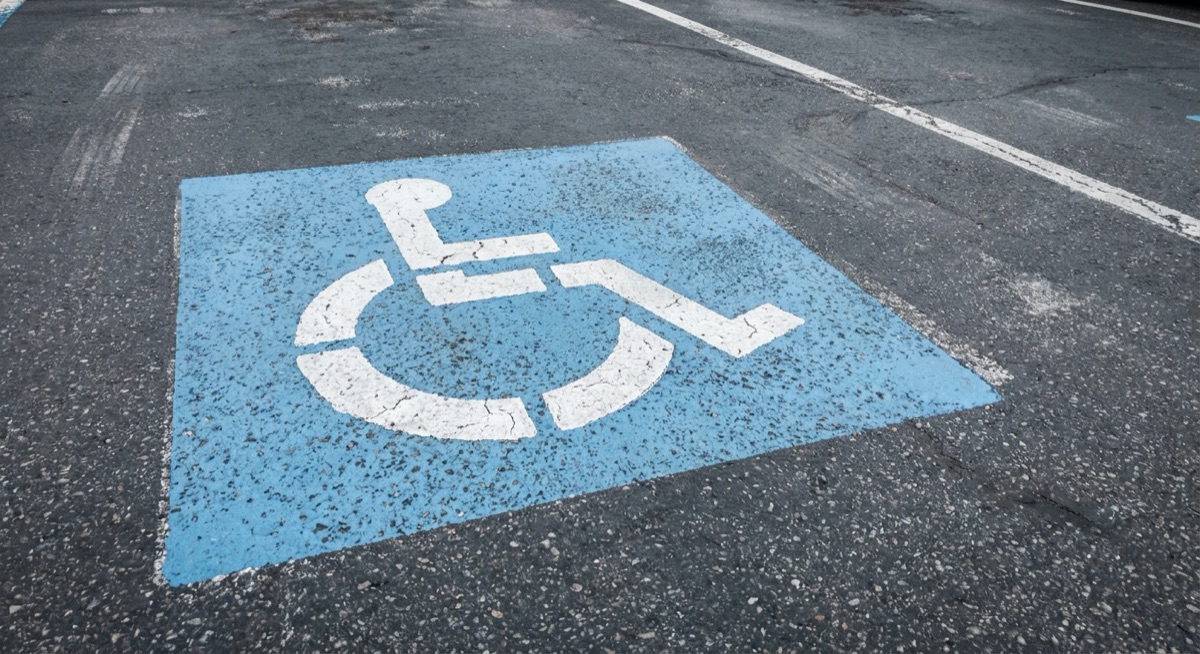
ADA-compliant accessible spaces require specific dimensions (8 ft wide stalls with 5 ft access aisles), signage, and surface markings. Virginia's Uniform Statewide Building Code incorporates ADA requirements for commercial lots.
Fire lane curb striping, "No Parking Fire Lane" lettering, and designated no-parking zones are required by Fairfax County Fire Prevention Code for commercial properties. We provide compliant fire lane marking.
Traffic flow arrows, stop bars, speed bumps, and pedestrian crosswalk markings improve lot safety and organization. We include these as part of full restriping packages or as standalone services.
Professional striping is precise and fast, minimizing lot downtime. Here's how we approach every job.
We measure the lot and confirm stall dimensions (9' × 18' standard), drive aisle widths (24' for two-way traffic), and the number and location of ADA accessible spaces required by federal guidelines.
Old lines are blown clean to ensure new paint bonds correctly. On freshly paved lots, we wait 24–48 hours after paving before applying paint to allow the asphalt to off-gas and cool fully.
We use a professional striping machine with traffic-grade paint at consistent widths (4" for stall lines, 6" for fire lanes). Chalk snap lines ensure straight lines and crisp corners — no eyeballed diagonals.
Handicap symbols, arrows, crosswalks, fire lane text, and curb painting are completed after stall lines dry. ADA stalls require the correct symbol, access aisle marking, and sign post placement per ADA Standards 502.6.
The ADA sets minimum accessible parking counts for any lot serving the public. Non-compliance exposes property owners to federal liability.
| Total Spaces | Accessible Required | Van-Accessible Required |
|---|---|---|
| 1–25 | 1 | 1 of the 1 |
| 26–50 | 2 | 1 of the 2 |
| 51–75 | 3 | 1 of the 3 |
| 76–100 | 4 | 1 of the 4 |
| 101–150 | 5 | 1 of the 5 |
| 151–200 | 6 | 1 of the 6 |
| 201–300 | 7 | 1 of the 7 |
| 301–500 | 9 | 2 of the 9 |
Source: ADA Standards for Accessible Design, Section 208. Van-accessible spaces require 96" width with 96" adjacent access aisle.
Striping cost is driven by the number of stalls, layout complexity, material type (paint vs. thermoplastic), and whether ADA-compliant accessible spaces need to be updated. The table below covers common scopes for Northern Virginia commercial and HOA lots.
Thermoplastic striping costs 2–3x more than paint but lasts 3–4x longer — for high-traffic lots and accessible space markings, it's typically the better long-term value. McLean Asphalt provides written striping proposals. Call 571-234-7040.
The choice between paint and thermoplastic striping is primarily a longevity and cost-per-year calculation. Water-based traffic paint at $600–$1,200 for a 50-space lot lasts 3–5 years on a sealed surface. Thermoplastic at $1,500–$3,000 for the same lot lasts 8–12 years. Over a 12-year period, paint requires 3–4 applications at $600–$1,200 each ($1,800–$4,800 total); thermoplastic requires 1 application at $1,500–$3,000. On a per-year basis, thermoplastic typically wins on high-traffic lots where paint wears faster.
ADA-compliant accessible space markings are where thermoplastic particularly earns its premium. Accessible space symbols, hash-line patterns, and 'Van Accessible' designations must remain clearly visible under ADA Standards. Paint fades faster in accessible spaces because they often receive the highest vehicle turn counts. Faded accessible markings create compliance exposure. Thermoplastic accessible markings stay clearly visible for 8–10 years without touch-up.
One striping timing issue that costs property managers money: waiting too long after sealcoating to restripe. Sealcoating covers over existing lines, and a freshly sealed lot without striping is immediately non-compliant for accessible spaces and unsafe for traffic flow. Striping should be scheduled 5–7 days after sealcoating — enough time for the sealer to fully cure but before the lot develops traffic management problems. McLean Asphalt coordinates restriping as the final step on every sealcoating project where the lot needs markings. Call 571-234-7040.
Not sure if you need service now or can wait? Here are the signs that indicate it's time to call McLean Asphalt at 571-234-7040.
When drivers can't clearly see stall lines, directional arrows, or fire lane markings, traffic flow breaks down and minor accidents increase. Faded markings also create ADA compliance exposure — accessible space markings must be clearly visible to meet current standards. If you can see the outlines of faded lines from your car but can't read them clearly, it's time to restripe.
Accessible space markings (stall lines, access aisle hash marks, ISA symbols, and signage) must be clearly visible under the 2010 ADA Standards. Post-sealcoating is a common time for accessible markings to fade or be covered entirely. McLean Asphalt restores ADA-compliant accessible markings including van-accessible designation, correct aisle width, and proper signage height.
Sealcoating typically covers over existing stripe lines. Lots should be restriped within 5–7 days after sealcoating to allow full sealer cure before paint is applied. A freshly sealcoated lot without striping is an immediate safety concern — drivers have no stall layout, no directional guidance, and no accessible space designation. McLean Asphalt coordinates striping immediately after sealcoating on all applicable projects.
If your lot has added delivery zones, EV charging stations, changed accessible space locations, or modified traffic flow since the last striping, the current markings may not reflect actual intended use. Conflicting striping creates confusion and liability. Re-striping to a new layout is a fraction of the cost of any surface modification.